Date
2025/12/18
Organisations
Department of Primary Industries and Regional Development
GRDC
Authors
Bridget Watkins
Alice Butler

Key messages
- Applying lime increased yield across all seasons (2017–2020) relative to no lime. Similar cereal yields were achieved regardless of rate (2, 4 and 6 t/ha), or whether lime was shallow incorporated or surface applied.
- Surface lime application is ineffective in managing subsoil acidity, particularly in the low rainfall region.
- The combined application of lime and gypsum provided no additional grain yield benefit, didn’t improve water use efficiency, or improve grain quality compared with lime alone, particularly for cereal crops.
- Shallow strategic tillage, involving incorporation of lime to 20 cm depth using a one-way disc plough, increased soil pH and reduced extractable aluminium concentration at 10-20 cm depth. However, this did not result in yield gains or water use efficiency benefits in 2017 and 2018 (wheat), and yields were reduced in 2019 (canola) and 2020 (barley) compared with no tillage.
- Based on these results, shallow strategic tillage is not recommended in the low rainfall regions in similar acidic sands.
Context
Optimal plant growth typically occurs in soil with a pHCa greater than 5.5 in the topsoil and greater than 4.8 in the subsoil. Soil acidification is a naturally occurring process that is accelerated in agricultural systems with the application of ammonium-based fertilisers and removal of alkalinity through grain export.
As soil pH (acidity) declines, levels of toxic aluminium increase, restricting root growth and reducing crop yield. In acidic soils, the availability of several plant nutrients (nitrogen, phosphorous, potassium and sulfur) is also reduced.
Lime is commonly utilised to address soil acidity, however when applied to the soil surface it is slow to reach the subsoil limiting its effectiveness at managing subsoil acidity. Where adoption of liming practices has been limited or insufficient, further subsoil acidification has occurred. Therefore, more immediate methods of addressing subsoil acidity are required.
An experimental field trial was conducted from 2017–2020 to assess the effects of lime and gypsum applications on soil pH and crop yield. Gypsum is more water-soluble than lime and the trial aimed to determine whether including gypsum provided any additional benefit in managing soil acidity.
Trial methods
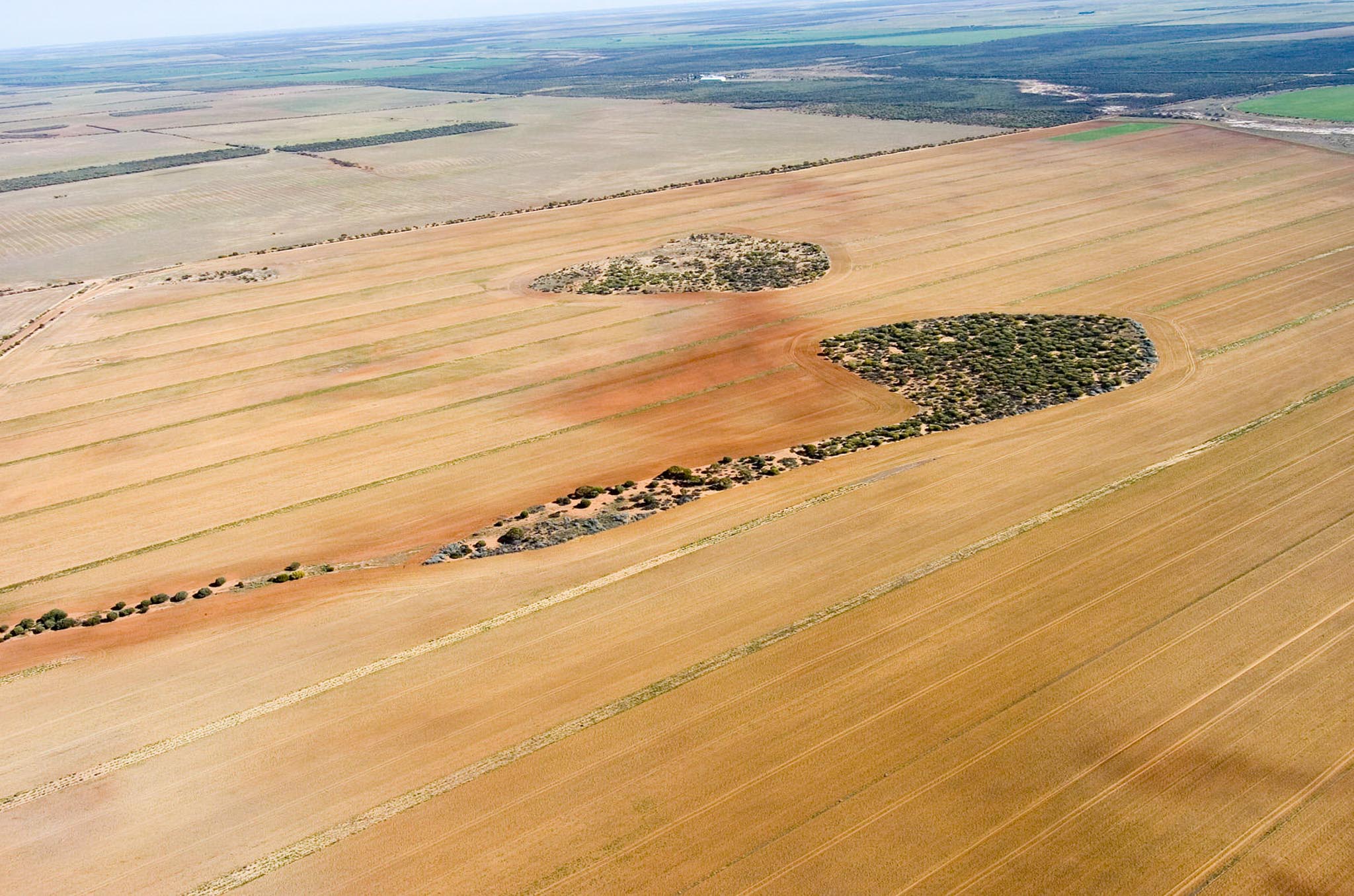
- Trial site: Kalannie, Western Australia
- Soil texture: Sandy loam (87% sand, 3% silt, 10% clay)
- pHCa : 4.35 (0–15 cm), 3.95 (20–40 cm)
- Trial design consisted of a factorial design involving:
- Four lime rates (0, 2, 4, 6 t/ha)
- Four gypsum rates (0, 1, 2, 3 t/ha)
- Two tillage treatments (no till, one-way plough to 20 cm depth)
- Crops: wheat (2017 and 2018), canola (2019), and barley (2020)
Results
Lime alone
- In 2017, 2018 and 2020 (cereal crops), lime applications increased cereal yields by 8-26% compared to the unlimed control with the strongest response from barley (2020). However, there were no yield differences between lime application rates, with similar yields achieved with the application of all three lime rates (2, 4 and 6 t/ha), regardless of whether lime was shallow incorporated or surface applied.
- Although a low yielding season (less than 200 kg/ha), canola yields were higher with the higher lime rates (4 t/ha and 6 t/ha) compared with 2 t/ha and the unlimed control.
- In this low rainfall environment, the surface applied lime (without incorporation) did not move below 10 cm in the soil over a 4-year period.
Lime and gypsum
- Applying lime and gypsum together, with or without shallow strategic tillage, did not increase yield or grain size beyond what was achieved by lime alone.
- The application of gypsum alone did have a significant result with increased grain yield in 2019 (canola). This may have been due to improved supply of sulfur nutrition from gypsum.
Tillage
- Shallow incorporation of all lime rates increased soil pH and reduced extractable aluminium concentrations in the 0-20 cm soil depth when measured in 2018 and 2020. However, no significant improvement in soil pH was observed below 20 cm.
- No increase in soil pH (reduction in acidity), or decrease in extractable aluminium concentration, was achieved in the no-till treatments below a depth of 10 cm, irrespective of lime application rates.
- Shallow incorporation of lime to 20 cm had no yield benefit when compared to the surface lime application (no-till). This may be due to the strongly acidic subsoil (pH less than 4 at 20-40 cm depth) restricting root growth and limiting water and nutrient uptake from the subsoil. Additionally, shallow incorporation may have contributed to short-term damage of soil structure and increased evaporation compared to the no-till treatments.
Page references and acknowledgements
Research summary developed from: Azam, G. and Gazey, C. (2023). Shallow incorporation of lime and gypsum has limited benefit over the sole-surface application of lime for improving grain yield and water use efficiency in the low rainfall Region of Western Australia. Sustainable Agriculture Research, 12(2), 57-72. https://doi.org/10.5539/sar.v12n2p57
Summary written by SW WA Regional Soil Coordinator Bridget Watkins, Murdoch University and Alice Butler, DPIRD; reviewed by Gaus Azam, DPIRD and Fran Hoyle, Murdoch University.
Contact: [email protected]
Article produced with investment from DPIRD and GRDC in the Soil Water and Nutrition (SWAN) Strategic Collaboration, DAW2407-001SPX extending research undertaken by DPIRD and GRDC investments DAW1902-003RTX and DAW00252.
SW WA Regional Soil Coordinator role is delivered by Murdoch University SoilsWest, led by the Grower Group Alliance’s South-West WA Drought Resilience Adoption and Innovation Hub and supported by the Australian Government Department of Agriculture, Fisheries and Forestry through funding from the Climate-Smart Agriculture Program under the Natural Heritage Trust.