Project
SWAN CollaborationDate
2026/06/30
Organisations
Department of Primary Industries and Regional Development
Grains Research and Development Corporation
Authors
Bindi Isbister
Jenni Clausen
Hasinur Rahman
Gaus Azam
Snapshot
Growers: Trevor and Renae Syme, Waddi Park Farming
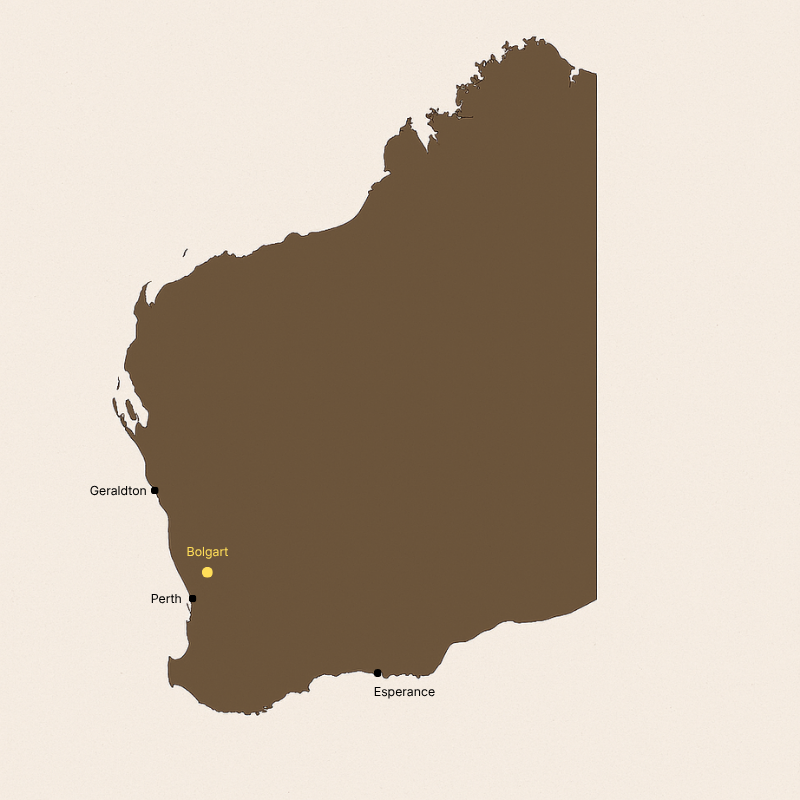
Location: Bolgart, north of Toodyay
Enterprises: cropping – wheat, canola, barley, lupins
Average annual rainfall: 400 mm
Average growing season rainfall: 330 mm
Soil types: gravel sandy-clay loam, sand over gravel, deep sands
Soil constraints: soil water repellence, compaction, surface and subsoil acidity, low water-holding capacity
Case study paddock amelioration: deep ripped to 350 mm (2018); 2 t/ha lime, clay spreading, delving 80-90 cm and spading 35-45 cm (2020); 1 t/ha lime and 0.5 t/ha gypsum (2022)
Key messages
- Combined liming, claying, delving and spading increased soil pH and clay content and reduced soil water repellence and soil compaction in all soil types.
- Amelioration redistributed soil nutrients but soil fertility remains low in the poor sands – soil potassium increased at the surface but soil organic carbon reduced at the surface and increased at depth.
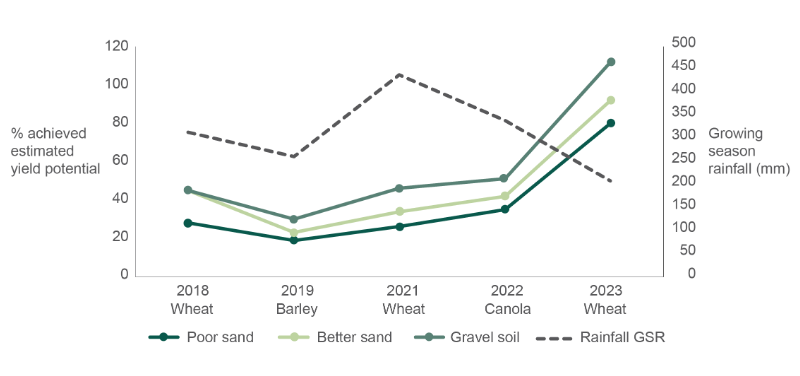
- Crop yields increased following amelioration, particularly on the gravels. Water use efficiency has improved with the proportion of yield potential achieved (in a dry season) ranging from 80% in the poor sand to 110% in the gravels.
- The improved performance has enabled continuous cropping in the case study paddock.
- The crop nutrition strategy is being reviewed to target the paddock’s new yield potential.
Background
Sandy soils commonly present multiple constraints that limit productivity and profitability, including soil water repellence, soil acidity, soil compaction, low fertility, and low water-holding capacity.
Soil water repellence resists water entry and infiltration, resulting in water flowing unevenly via preferred pathways, leaving other parts of the soil dry (Figure 1). Soil water repellence is often associated with sandy topsoil because the small surface area of the sand particles quickly becomes saturated with waxy, hydrophobic organic compounds, derived from plants and microbes. More common in the top 10 cm and on sandy soils, sandy gravels and forest gravels, soil water repellence causes problems with crop establishment, weed control, and productivity.
Claying is a long-term solution to water repellent topsoils, achieved by either delving to bring up clay from the subsoil or excavating clay from a nearby source and spreading it onto the paddock. The clay incorporation requires soil mixing, which provides the additional benefit of mixing surface-applied lime down the profile to address subsoil acidity, and multiple sandy soil constraints simultaneously.
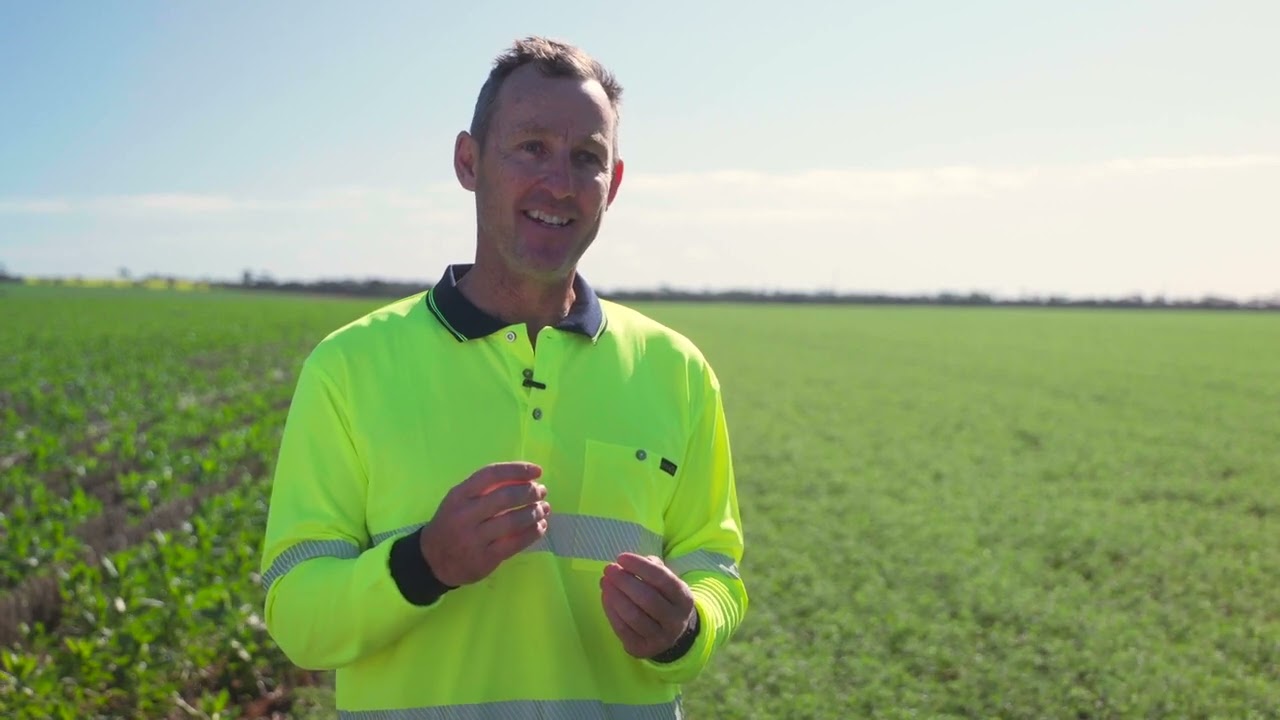
Trevor has been ameliorating soil on his farm since 2008 when he first started claying poor sandy patches. Soil types across the farm include deep white water-repellent sands, loamy clays, forest gravels, and gravelly sand over clay. Most of the sands have now been ameliorated to overcome soil water repellence, soil acidity, and soil compaction.
The cropping program is 100% controlled traffic. Following strategic soil amelioration with soil amendments and deep tillage, conservation cropping is continued with minimum-tillage seeding and full stubble retention. The five-year crop rotation is lupin-wheat-canola-wheat-barley.
Trevor farms with the philosophy that he cannot control how much it rains but he can influence what happens to it once it hits the soil. He takes a systems approach to grain growing, working to manage pH, weeds, soil water repellence, and compaction.
This case study investigates a low-performing paddock within a farm-wide soil amelioration program, assessing the benefits of amelioration using before and after soil results, crop performance over several seasons, and lessons learned implementing amelioration.
Case study paddock
Soil types and constraints
The case study paddock has a mix of deep sands, sand over gravel, and gravel soils with a range of soil constraints including soil water repellence, subsoil compaction, and surface and subsoil acidity.
The deep sands and sand over gravels have been broadly grouped into ‘poor sands’ and ‘better sands’ based on crop biomass (NDVI) and ground-truthing. ‘Poor sands’ are lower yielding areas of deep sands and deep sand over gravel/clay, while ‘better sands’ are higher yielding areas within the sands (Figure 2).
The general properties of the poor sands, better sands and gravel soils before amelioration are summarised in Table 1.
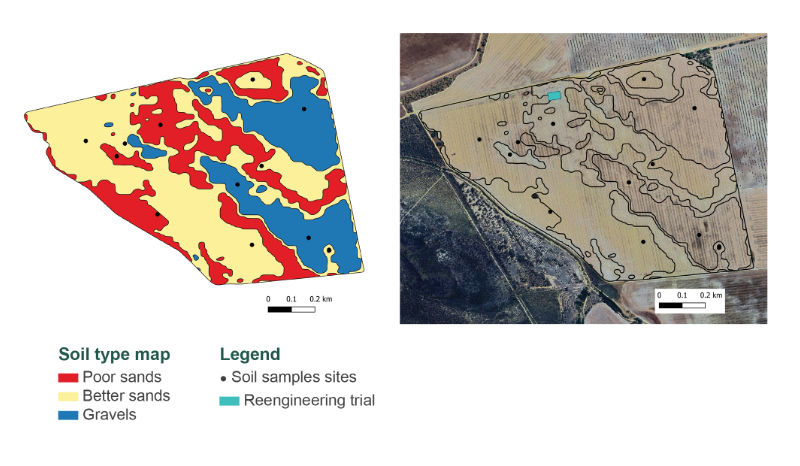
Table 1. Key soil properties of each soil zone before soil amelioration.
| Poor sands | Better sands | Gravels | |
|---|---|---|---|
| Description | Deep sand, less than 5% clay to 80 cm. Varying depth to gravel/clay – more often deeper than 75 cm at the sites measured. Depth beyond 80 cm unknown. | Deep sand, less than 5% clay to 80 cm. Varying depth to gravel/clay. Between 50–75 cm at some sites measured. Depth beyond 80 cm unknown. | Gravelly sand over gravelly clay loam. Varying depth 20–40 cm at sites measured. Clay pits were excavated from under gravel areas. |
| Soil water repellence | Low severity | Moderate severity | Severe severity |
|
Soil pH (0-10 cm) CaCl2 |
5.0 | 5.3 | 5.1 |
|
Soil pH (subsoil) CaCl2 |
< 4.5 (10–80 cm) | < 4.5 (10–60 cm) | > 4.8 |
| Soil compaction | Above 2,500 kPa (35–60 cm) | Above 2,500 kPa (35–60 cm) | n/a* |
| Soil organic carbon (0-10 cm) | 0.3% | 0.6% | 1.0% |
| Potassium (0-30 cm) | < 45 mg/kg** | 45 mg/kg | 76 mg/kg |
| **These samples were all below the minimum measurable threshold of 15 mg/kg so actual levels may be lower than this. | *Unable to obtain a measurement of compaction in gravel soils. |
Soil amelioration
Historically, the case study paddock was a consistently poor performer. The paddock was deep ripped to 350 mm in 2018, but soil penetrometer measurements in 2020 indicate a hard pan remained between 350–600 mm. The paddock was left out of production (brown manured) before implementing the soil amelioration program in 2020.
Clay was excavated from a clay pit within the same paddock and spread over the deep sands (about 30 ha of ‘weaker’ areas where clay was not in reach of the delver). The clay source was about 30-40% clay and applied at 300 t/ha. After spreading, the clay on the surface of the soil was smudged to break up clods and prepare for incorporation.
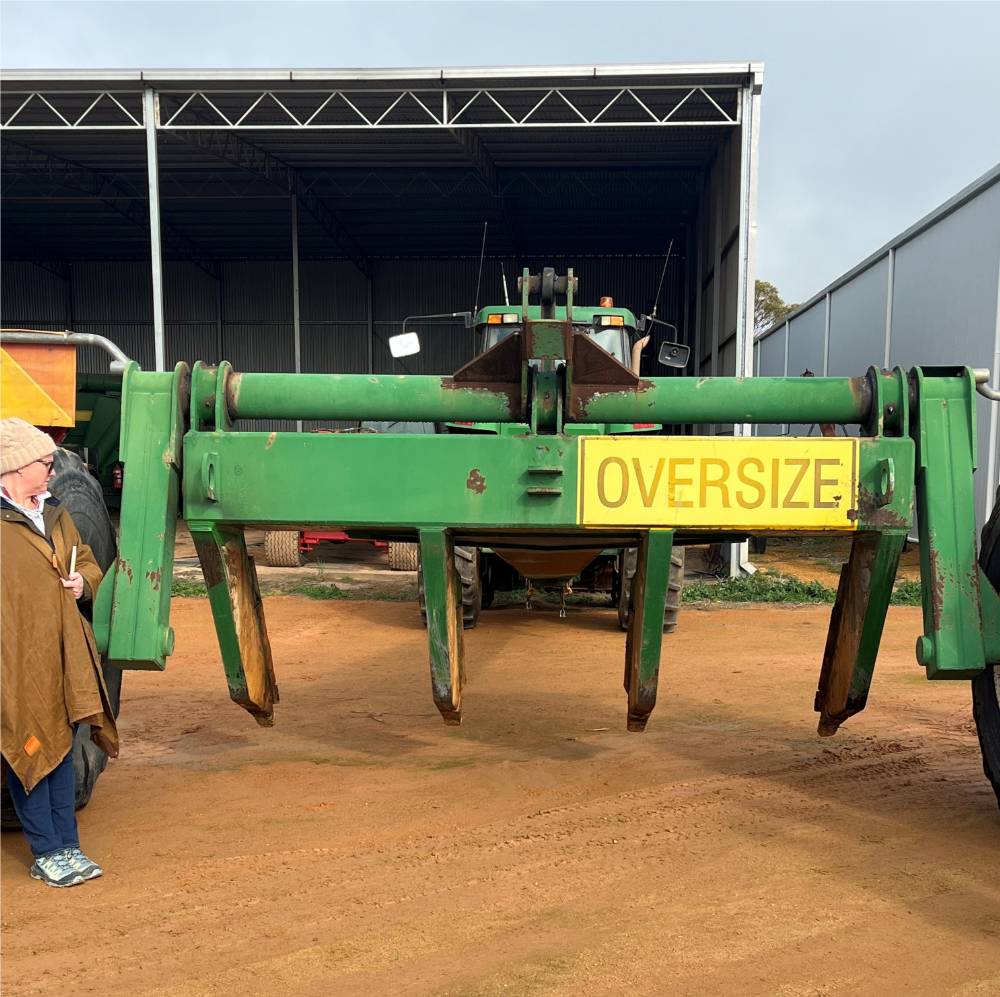
Trevor delved the entire paddock with his own designed and built clay delver, excluding the gravel ridges. In areas where clay was within reach of the delving tynes, additional clay was brought to the surface layer. The delving was then followed by spading to mix in the clay and 2 t/ha lime through the top 35–45 cm of the soil.
Another 1 t/ha of lime and 0.5 t/ha of gypsum was spread before seeding in 2022.
Case study methods
Soil type zones were identified using satellite imagery at peak crop biomass in September and ground-truthed with soil testing. Before amelioration, soil samples were taken at 12 sites to a depth of 80 cm and in 10 cm increments to measure the soil properties in relation to the spatial variation in crop production across the paddock. Soil samples were taken from the same sites in 2023 to assess the impact of soil amelioration on soil properties.
The impact of the soil amelioration on crop yields across the different soil types was investigated using paddock yield data. Header yield data was not available to map the yield across the paddock, so surrogate yield maps were generated using the paddock average yield and NDVI satellite imagery in September from 2018 to 2023. Yield maps were generated for each year by dividing the paddock yield average in t/ha by the paddock average NDVI value and multiplying the NDVI map by that factor.
Results
Soil properties
Water repellence
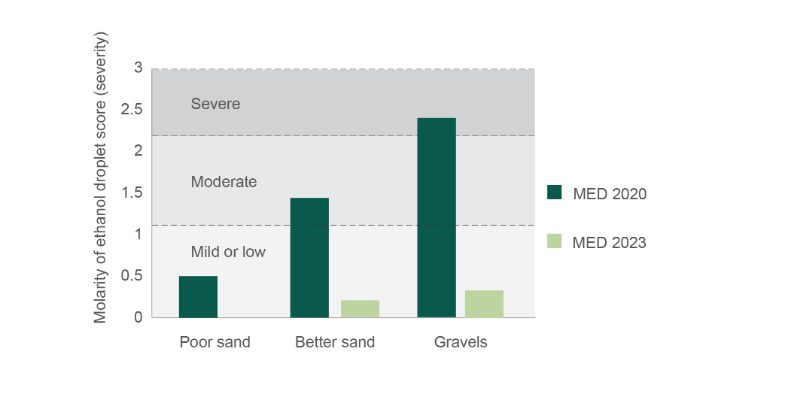
Soil amelioration decreased the presence and severity of soil water repellence across all soil types (Figure 3).
Before amelioration, soil water repellence ranged from non-repellent to severe (MED 0–3.2) across the paddock. Repellence was on average lowest in the ‘poor’ sands which had a low rating of water repellence (MED 0.5), moderate in ‘better’ sands (MED 1.4) and severe in ‘gravels’ (MED 2.4) (Figure 3).
Soil acidity
Prior to amelioration, all soil types had a topsoil pH below the recommended 5.5. Both ‘poor’ and ‘better’ sands had a soil acidity constraint to depth. The ‘poor sands’ ‘had an average pH below 4.5 between 10 and 80 cm, while the ‘better sands’ had a slightly improved pH in the deeper subsoil (above 4.5 from 60 to 80 cm). Amelioration successfully lifted soil pH above the target level of 5.5 in the topsoil and 4.8 in the subsoil in all soil types (Figure 4).

Compaction
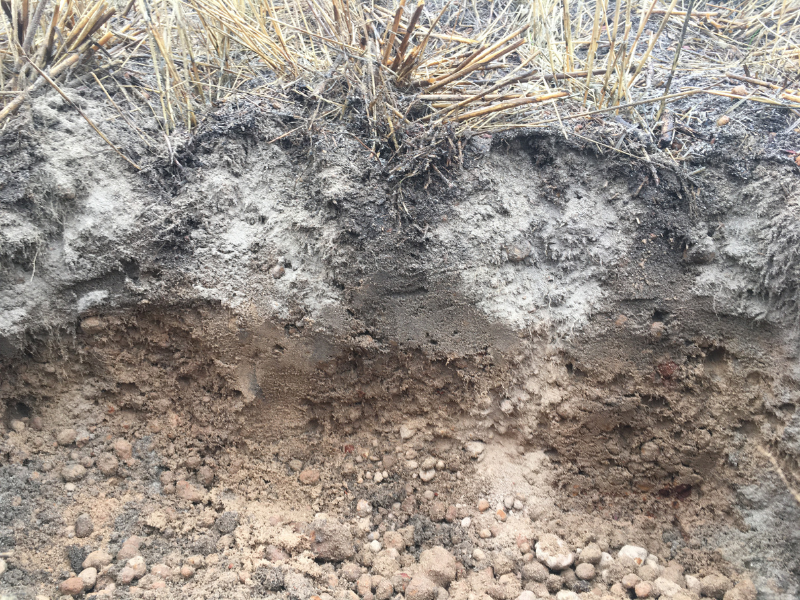
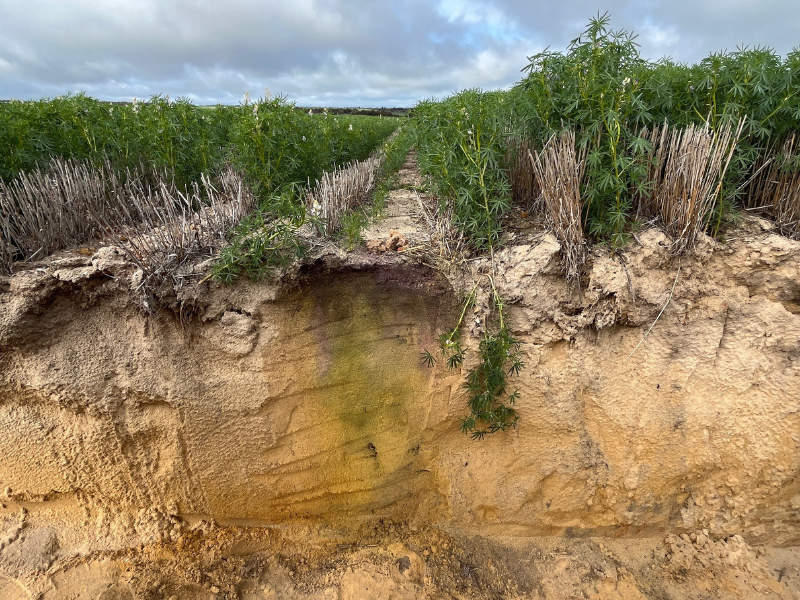
Delving brought clay to the surface and removed subsoil compaction. Since being ameliorated, the paddock has been managed under a controlled traffic system with wheel tracks and widths of all machinery operations confined to permanent wheel tracks to limit compaction. Soil pit observations five years after delving indicate the soil remains less compacted (Figure 5) with larger deep-rooted plants than in the untreated areas (Figure 6).

Soil fertility
Organic carbon content
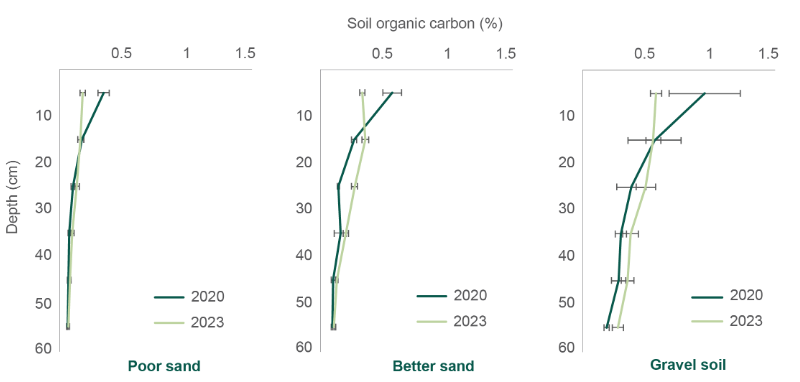
Soil organic carbon levels were lower in the sands than the gravels. Amelioration lowered soil organic carbon, with no changes evident in subsoil on the ‘poor’ sand, or gravels where greater variability was evident. Amelioration redistributed soil organic carbon with levels dropping in the top 10 cm layer and increasing in deeper layers for ‘better’ sands (Figure 7).
Potassium
Before amelioration, all soil types were below critical potassium (K) levels in the 0–10 cm layer (~40 mg/kg, Brennan and Bell 2013), but gravels had a slightly higher subsoil K. Soil amelioration increased potassium as measured by Colwell K in the top 20 cm of the ‘better’ sands and 30 cm in ‘gravels’, but remained low in the ‘poor’ sand to above critical levels in the topsoil (Figure 8).

Crop yield
Before amelioration, the case study paddock was so constrained that it had to be fallowed after every second growing season. However, since the 2020 amelioration, paddock productivity has been transformed and is now continuously cropped. In addition, canola has been included in the rotation – something that was previously not possible.
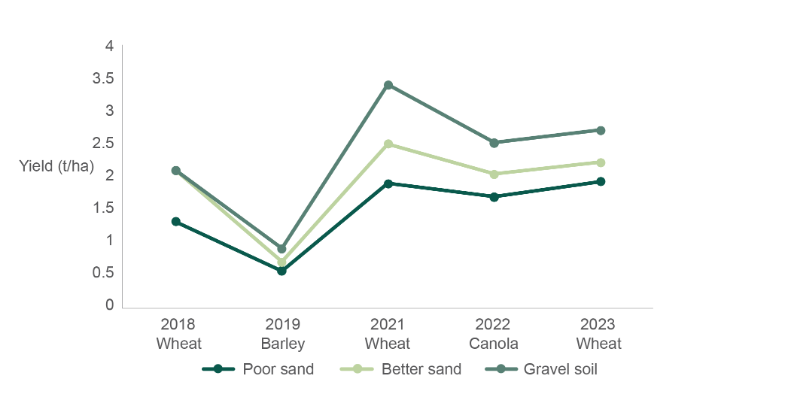
Crop yields in the case study paddock were consistently low pre-amelioration (2018–2019), albeit with some variation and better performing areas (Figure 9). Post-amelioration (2021–2023), yields increased with some areas of the paddock consistently performing better after amelioration such as the north-west corner (a deep sand). The yield increase may partly reflect the higher rainfall in 2021 and 2022, compared with 2018 and 2019. However, the most striking improvement occurred in 2023 (a below-average rainfall season) when the average yield was more than 1 t/ha higher than in 2019 (not shown), despite receiving less rain.

Yield responses to amelioration were measured across all soil types (Figure 10):
- Gravel soils responded most strongly to amelioration — first-year wheat yields were 1.4 t/ha higher than the previous crop under similar rainfall.
- Better sands also responded strongly, though less dramatically than gravel soils.
- Poor sands, while improved, remain the lowest-performing zone of the paddock.
The soil results indicate that soil amelioration has removed the primary physical and chemical constraints to crop growth and unlocked yield potential. However, to fully capitalise on the benefits of amelioration, the ongoing challenge will be to improve nutrient availability in the poor sands, which have lower organic carbon and potassium levels.
Improvements in water use efficiency (WUE)
To compare crop performance before and after amelioration, paddock yields were benchmarked against an estimated water-limited yield potential (YP), calculated as:
YP = Available moisture × WUE
where available moisture = (0.25 × summer rainfall) + growing season rainfall – 110 mm, and WUE = 20 kg/ha/mm for cereals or 13 kg/ha/mm for canola (Hunt and Kirkegaard, 2015). The percentage of YP achieved indicates water use efficiency. This approach highlights yield gaps and responsiveness across soil types.
Results show that amelioration significantly improved water use efficiency, especially in the dry 2023 season, with yields achieving 80% of YP on the poor sands, 92% on the better sands, and 112% on the gravels – more than double pre-amelioration levels (Figure 11). This suggests that the reduction in soil water repellence, subsoil acidity and compaction has, in turn, increased water infiltration and root access to deeper soil moisture and nutrients. However, in the very high rainfall year of 2021, the estimated water limited yield gap was similar before and after amelioration (although actual yields were higher after amelioration). In high-rainfall years, the simple YP equation can overestimate attainable yield, making the percentage of YP achieved appear low. This happens because much of the extra rain drains beyond the root zone, particularly in sandy soils that have low clay content and poor water-holding capacity.
Benchmarking paddock performance against ‘blue-sky’ soil re-engineering trial
Trevor has also hosted a GRDC-DPIRD soil re-engineering trial since 2021 on a poor sand within the case study paddock. This blue-sky research involved fully excavating the soil to 80 cm and rebuilding layer by layer – adding clay, lime, compost, and fertiliser to investigate what may be possible with deeper soil amelioration (re-engineering) and complete removal of soil constraints. The trial has been managed the same as the rest of the paddock (Azam et al. 2024).
The highest yields from this trial in 2021 (wheat 1.59 t/ha), 2022 (canola 2.78 t/ha), and 2023 (triticale 1.64 t/ha) were achieved in plots where the soil was decompacted, and where lime, clay and compost were incorporated to 80 cm depth. By contrast, untreated control plots achieved yields in 2021 of 0.65 t/ha (wheat); 2022 of 0.64 t/ha (canola) and 2023 of 0.55 t/ha (triticale).
Although not a perfect comparison as the trial is in the worst soil type in the paddock, the trial provides an untreated control to the paddock amelioration and an unconstrained soil water-limited yield goal. Compared to the untreated controlled in the trial, the paddock amelioration increased yields by more than 1 t/ha across all crop types and seasons and had comparable yields to the highest yielding treatments in 2021 and 2023.
Lessons learned from farm experience
- Do it once, do it properly. There is a compounding benefit to ameliorating sooner rather than later, but the decision comes down to cost and ability to fit it in. While amelioration is an expensive outlay, the opportunity cost of delayed action in lost yield adds up quickly.
- When first starting with claying and incorporation, Trevor relied on contracted services. This meant amelioration could only happen in good seasons when cashflow allowed and when it logistically fit with his program.
- Results improved once Trevor brought it all in-house. With contractors, timing depends on their availability, which can mean timing may not be optimal for the operation. For example, spading is ineffective when it is dry. In-house, the operations are slower, but allow for better timing to soil conditions, attention to detail, and better results.
- Paddocks were left out of the rotation to undertake the amelioration intervention. This allowed the work to be done in September/October rather than autumn, fitting better with farming operations and ideal soil moisture conditions.
- Don’t clay where clay isn’t needed. Some parts of the farm have clay within reach of the delver, and delving to bring up clay is far more cost-effective than spreading. Trevor only clays the deep sandy areas in the paddock that need it, where the delver can’t reach any clay.
- Using Google satellite imagery proved as effective as gamma radiometric surveys to identify where the clay was and which parts of the paddock needed clay, and which didn’t. Soil colour differences indicate areas to check, which can be ground-truthed by digging holes to confirm clay presence and depth.
- Good incorporation is essential. Trevor has used consistent clay rates throughout the process, around 300 t/ha, but initially wasn’t mixing deep enough. This caused establishment issues from surface sealing where clay was applied. The farm originally used offset discs for incorporation, which only mixed to 15–20 cm depth. Switching to the spader for deeper mixing has delivered better results.
- Seeding is probably the biggest management factor post-amelioration. Trevor always plants cereals in the first year, primarily for ground cover. When seeding, go slow, go steady, and always go wet. Once stubble is on the paddock (year 2), dry seeding is fine, but do not dry seed in the first year.
- Tramline management is needed in the second year (in the summer/autumn before the second crop) using a tramline renovator.
- In some cases, yields have doubled. Fertiliser inputs have been increased to meet the demands of higher yields, and to replace what is being pulled off from the paddock. In general, the fertiliser requirements are adjusted on the new yields achieved post-amelioration.
Next steps
- Across the farm, crop nutrition is the biggest focus. Trevor is investigating how high he can push yields while maintaining soil fertility. Now that the farm has been ameliorated, Trevor is revisiting variable rate strategies to optimise lime and nutrition applications.
- Trevor deep ripped the case study paddock to 60 cm in 2026 to remove the slight compaction layer below the spader working depth. He will also investigate whether higher nutrient applications are needed to match the new yield potential created by amelioration and further close the gap between estimated and achieved yields.
For more information
Bindi Isbister
Research Scientist
Soil Productivity
Grains Research and Innovation
Department of Primary Industries and Regional Development
E: [email protected]
P: (08) 9956 8555
References
Azam G, Wickramarachchi K, Rahman H, Rahman MS, Reynolds C, McDonald G, Parker W, Hall D, Scanlan C, Davies S, Gazey C (2024)
The Resilience of Re-engineered Sandy Soils in Wet and Dry Seasons in Western Australia. Paper presented at the Australian Agronomy Conference, Albany.
Brennan RF and Bell MJ (2013)
Soil Potassium—Crop Response Calibration Relationships and Criteria for Field Crops Grown in Australia. Crop & Pasture Science 64: 514-522.
Hunt J and Kirkegaard J (2015)
Acknowledgements
The research outlined in this case study was jointly funded by GRDC and DPIRD as part of the DAW1902-003RTX project Re-engineering Soils to Improve the Access of Crop Root Systems to Water and Nutrients Stored in the Subsoil and the DAW2401-001SPX project Soil Water and Plant Nutrition.